
POTS: Eight Months Without a Diagnosis, and the Questions Medicine Still Struggles to Answer
At 15, Florence was a competitive athlete. Then, almost overnight, her body began imposing limits she could not understand. Despite repeated medical consultations, it took eight months for her to receive a diagnosis. Her story takes us inside a condition that remains poorly understood, while raising a troubling question: what does it take to be heard when medicine cannot immediately provide an answer?
A Healthy Heart, an Exhausted Athlete
Florence's heart rate reaches 200 beats per minute during a treadmill stress test. Yet the examinations reveal no obvious cardiac abnormality. According to her account, she is told that her difficulties might be related to poor endurance.
Just a few months earlier, however, this 15-year-old had been competing in the 400 metres.
How could an athlete accustomed to intense training suddenly find herself exhausted by everyday activities as simple as standing up or preparing breakfast?
It all begins in November 2024, following a COVID-19 infection. Florence develops palpitations, dizziness, headaches, and unusual fatigue. Her cheeks become flushed, she sweats more than usual, and she struggles to tolerate heat. As the weeks pass, her symptoms persist and gradually disrupt her daily life.
Initially, her family considers the possibility of a concussion. A hospital visit ends after approximately twelve hours of waiting, without a satisfactory explanation. More medical consultations follow.
Some test results are reassuring, but Florence is not getting better.
It is important to clarify that a heart rate of 200 beats per minute during exercise does not, on its own, indicate a particular medical condition. The significance of that number depends partly on age and exercise intensity. What makes Florence's story concerning is therefore not this isolated result, but the combination of her symptoms and the dramatic change in her ability to function.
For eight months, she and her family will search for an explanation.
The answer lies in a system of the human body that most of us barely know exists.

Florence Thibault, age 15, at the Canadian Athletics Championships in Montreal.
The Invisible System That Allows Us to Stand
Imagine you have been lying down for a few minutes. You get up to grab a glass of water.
Without any conscious effort, your body immediately responds.
Gravity pulls some of your blood toward your legs and abdomen. To maintain sufficient blood flow to your brain and other organs, your blood vessels constrict and your heart rate adjusts.
These processes are largely controlled by the autonomic nervous system, which also regulates digestion, sweating, and several other essential bodily functions.
In people with postural orthostatic tachycardia syndrome, better known as POTS, this adjustment works differently.
When they stand up, their heart rate increases excessively, often accompanied by dizziness, palpitations, weakness, or difficulty concentrating.
For adolescents aged 12 to 19, the diagnostic criteria include a sustained increase in heart rate of at least 40 beats per minute within the first ten minutes of standing, without a significant drop in blood pressure. Symptoms must have persisted for at least three months, and other possible causes must be ruled out.
Perhaps the most surprising aspect is this: someone can have a structurally healthy heart while experiencing a significant disorder of cardiovascular regulation.
This is why reassuring cardiac test results do not always explain what a patient is experiencing.
But if POTS can be assessed using relatively straightforward measurements of heart rate and blood pressure, why do some patients wait so long for a diagnosis?
Eight Months of Searching, All the Way to Michigan
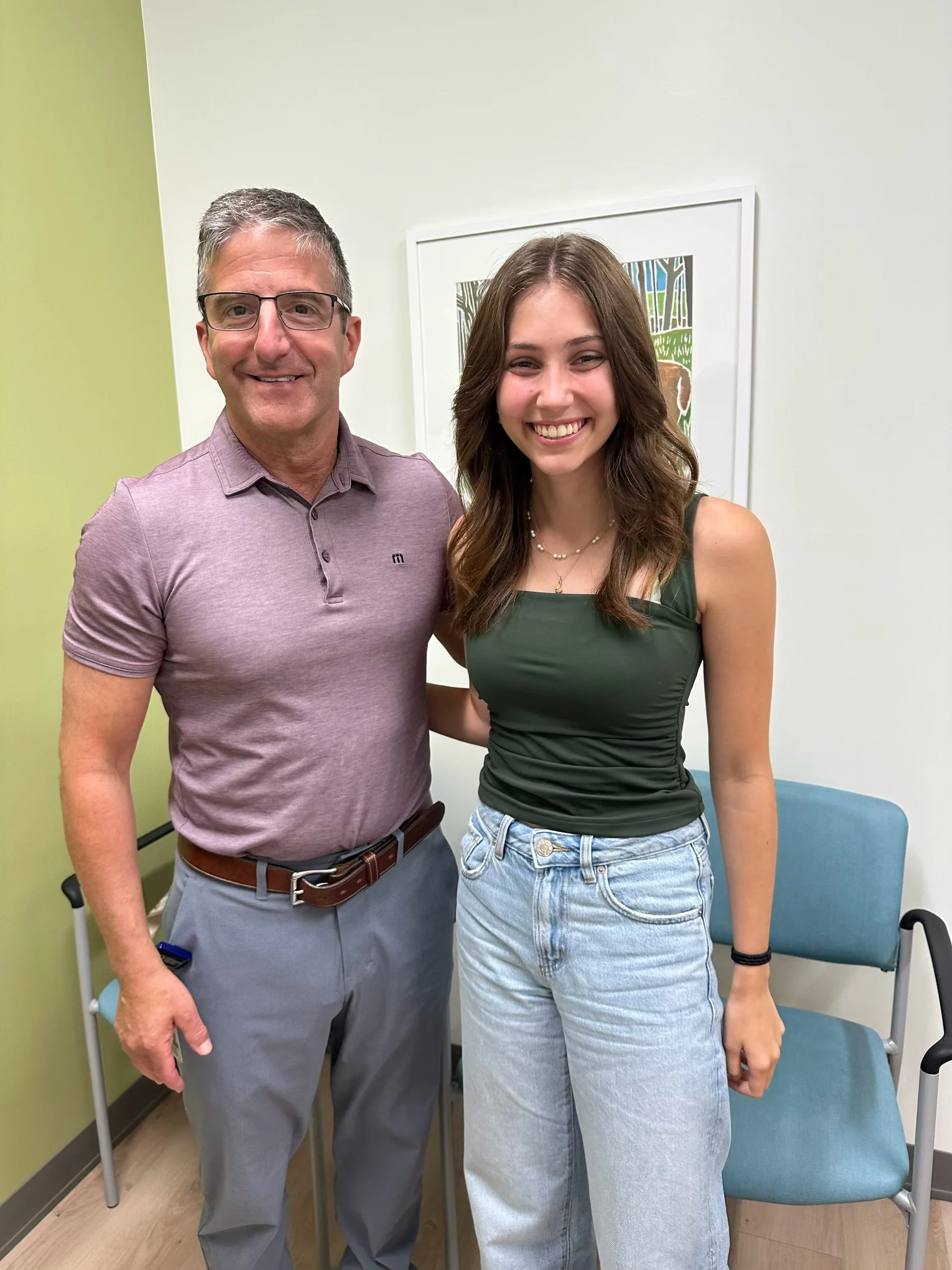
Florence with Dr. David Stone, a pediatric cardiologist, in Michigan.
Between November 2024 and July 2025, Florence visits approximately four hospitals or other healthcare facilities, sometimes on multiple occasions.
According to her account, when her mother raises the possibility of POTS with her family physician, the suggestion is not pursued. Instead, her symptoms are attributed to anxiety.
Anxiety can cause very real physical symptoms and can coexist with other medical conditions. However, it should not automatically become the explanation when persistent symptoms remain unexplained.
Florence's mother is an experienced nurse. Her medical knowledge allows her to continue investigating and consider the possibility of an autonomic nervous system disorder.
At home, she performs a NASA Lean Test on her daughter, an assessment that involves monitoring changes in heart rate and blood pressure while standing and leaning against a wall.
This test does not replace a comprehensive medical evaluation. It can, however, provide useful observations to help guide further investigation.
In July 2025, Florence travels to Michigan to consult Dr. David Stone, the pediatric cardiologist who, according to her family, diagnoses her with POTS after reviewing, among other information, the measurements collected by her mother.
Eight months after her first symptoms appeared, Florence finally has an answer.
Yet this outcome raises another question.
Her mother had medical knowledge. Her family had the resources to pursue repeated consultations and travel to the United States. Even with these advantages, it took eight months.
What would have happened if nobody around her had known about POTS?
It is impossible to answer that question with certainty in Florence's case. But research suggests that difficulties obtaining a diagnosis are far from unusual.
In a 2024 study published in the Journal of the American Heart Association, researchers collected responses from 227 people who had received care through a specialized pediatric program. Nearly three-quarters reported a delay in diagnosis, while more than half said they had previously been made to feel that their symptoms were "all in their head."
This study does not represent everyone living with POTS: participants came from a specialized centre and reported their experiences retrospectively. Nevertheless, it highlights a difficulty that many patients appear to share.
And this difficulty particularly affects a population already at the centre of many questions in medicine: young women.
Why Does POTS Affect Women More Often?
POTS is diagnosed far more frequently in girls and women, particularly during adolescence and early adulthood.
But why?
A scientific review published in 2025 in Autonomic Neuroscience: Basic and Clinical explores several possible explanations.
One involves blood circulation.
When we stand, the amount of blood returning to the heart can decrease. If the heart receives less blood with each beat, it may compensate by beating faster to maintain adequate circulation.
The researchers explain that certain average physiological differences between sexes, including blood volume, venous return, and autonomic regulation, may contribute to a greater vulnerability to orthostatic intolerance among women.
Other hypotheses involve hormones and the immune system.
However, no single explanation currently accounts for every case of POTS.
This is precisely one of the challenges facing researchers: two people can experience similar symptoms without necessarily sharing the same underlying physiological mechanism.
For some, blood volume may play an important role. For others, researchers are investigating disturbances in nervous system regulation, excessive activation of the sympathetic nervous system, or immune-related processes.
The predominance of women also raises a broader question: does medical knowledge adequately account for physiological differences between sexes?
Understanding these mechanisms could help clinicians recognize the condition more effectively and develop treatments better suited to its different forms.
Can an Infection Change How the Body Functions?
In Florence's case, symptoms appeared after a COVID-19 infection.
Since the pandemic, researchers have documented cases of POTS and other autonomic disorders developing after infection with SARS-CoV-2.
A systematic review published in 2023 in the European Journal of Neurology examined cardiovascular autonomic dysfunction following COVID-19.
Scientists are exploring several possible explanations, including immune disturbances, inflammation, and changes in nervous system and circulatory regulation.
However, one event occurring after another does not necessarily establish a cause-and-effect relationship. Florence's experience alone cannot demonstrate that COVID-19 directly caused her POTS.
This uncertainty does not make her symptoms any less real. Rather, it illustrates how a condition can be clinically recognized even while its precise causes remain under investigation.
And even after receiving a diagnosis, another challenge begins: learning to live with its consequences.
What She Misses Most Is Not What You Might Expect
When we think of a former competitive athlete living with a chronic illness, we might assume that what she misses most is running, training, or competing.
For Florence, the answer is much simpler.
She wishes she were no longer constantly exhausted. And she wishes she could feel hungry again.
Now 17, she is pursuing her studies in natural sciences. Yet some days begin with an obstacle before she has even left home: despite sleeping ten or twelve hours, she may feel too exhausted to prepare breakfast.
Her loss of appetite is accompanied by digestive difficulties, including symptoms of gastroparesis. Eating, something most people do without thinking, can become complicated.
At school, brain fog affects her concentration and memory. For a student expected to learn new concepts, solve problems, and prepare for exams, these difficulties create an additional challenge. They also compound the effects of her pre-existing attention deficit disorder.
Florence also experiences light sensitivity, eye pain, and headaches. She wears specially adapted glasses to reduce her sensitivity to light.
According to the explanation she received from her pediatric cardiologist in Ottawa, her eye pain may be related to reduced blood flow to the eyes in the context of her POTS. Researchers are indeed studying circulatory disturbances associated with the syndrome, particularly those affecting the brain, but the precise mechanisms behind eye pain are not yet fully understood.
These symptoms illustrate why POTS cannot be reduced to an elevated heart rate.
A scientific review published in 2026 in Cureus examines cognitive difficulties associated with the syndrome. It considers possible mechanisms involving cerebral circulation and autonomic regulation, while emphasizing the limitations of current knowledge.
For Florence, however, the question is much more immediate: how do you succeed in school when your body is constantly telling you to slow down?
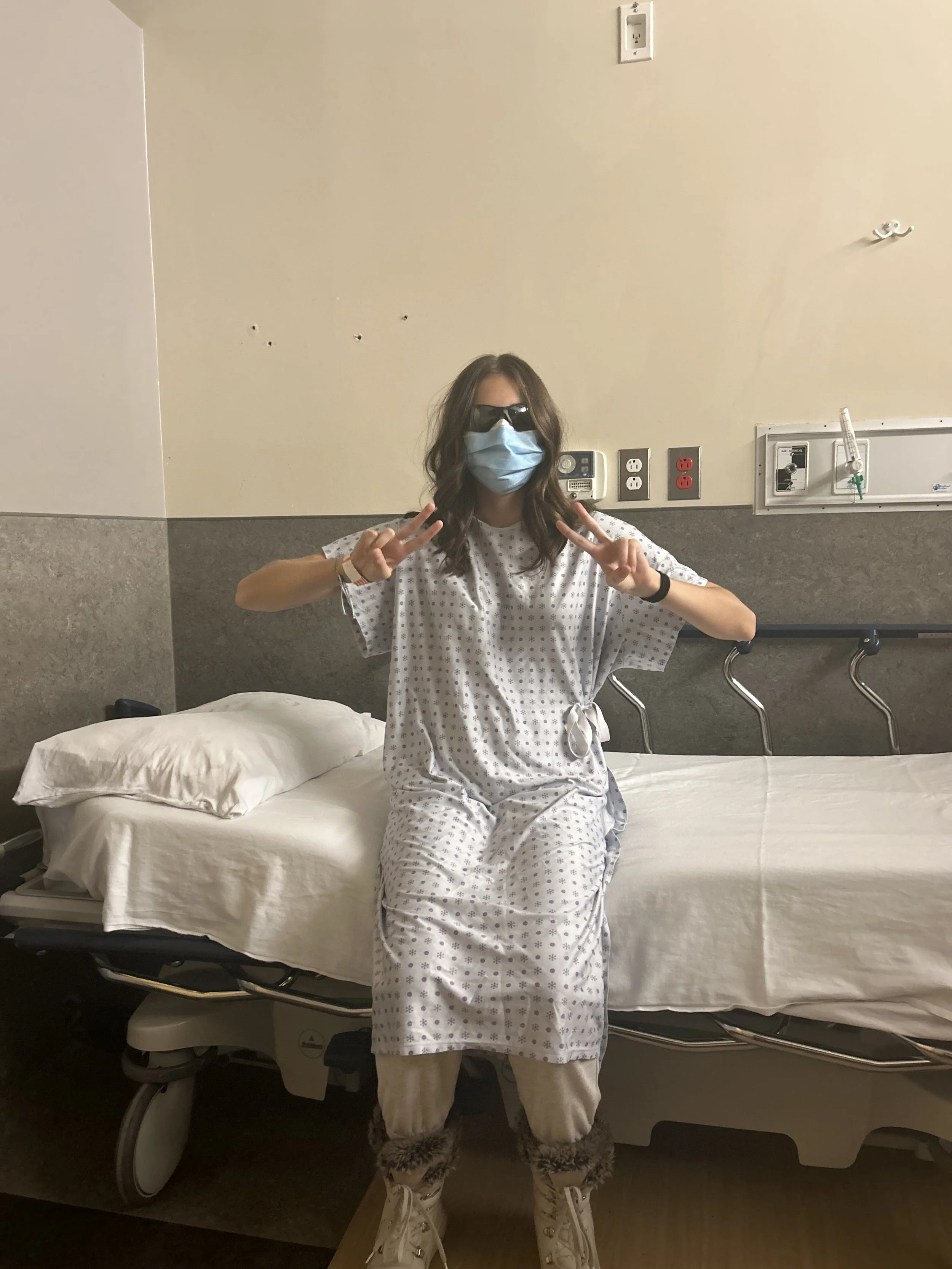
At the onset of her condition, Florence lost 10 pounds in one week. She subsequently went to the emergency department, where she waited twelve hours before seeing a physician. She wore sunglasses to help manage her sensitivity to light.
One Hour of Krav Maga, and What Nobody Sees Afterwards
Florence has not completely given up sports.
This year, she has been practising Krav Maga, a martial art focused on self-defence. During classes, she makes an effort to complete the same exercises as everyone else.
At first glance, there may be no visible indication of how much additional effort this requires.
But after training, her fatigue intensifies and her symptoms worsen.
This is one of the hardest realities to understand about an illness that is often invisible: being able to do something does not mean being able to do it without consequences.
A systematic review published in 2025 on exercise intolerance in people with POTS found that their cardiovascular responses to physical activity can differ from those of people without the condition.
Physical deconditioning can contribute to certain difficulties, particularly when someone has had to reduce their activity levels for an extended period. But it does not fully explain all the mechanisms involved in POTS.
Gradual, individually adapted physical activity may help some patients. That does not mean they should ignore worsening symptoms or consistently push themselves to keep up with others.
Florence wants to maintain an active life and hopes to gradually return to running. Her determination is real, but it should never be used to minimize what she is going through.
What her classmates see during a training session does not necessarily reveal how she feels once she gets home.
When a Diagnosis Is Not Enough to Be Heard
In September 2026, Florence encounters another medical obstacle.
She wants to discuss stimulant medication for her attention deficit disorder. According to her account, her pediatric cardiologist in Ottawa had sent a written opinion to her family physician indicating that such treatment could be considered in her case.
Florence reports that her physician instead consulted an artificial intelligence tool using limited information, including her age and the fact that she takes propranolol, before declining to prescribe the medication.
We do not have access to her complete medical records or the tool's exact response. It would therefore be unjustified to conclude that the medication was appropriate or that the physician's decision was medically incorrect. Stimulant medications can affect heart rate and blood pressure, making individualized assessment important.
Nevertheless, the incident raises a question: how can artificial intelligence tools be integrated into clinical decision-making without overlooking a patient's complete medical history and the opinions of specialists?
AI can help clinicians access information quickly. But a general response based on a handful of details cannot, on its own, replace a personalized medical evaluation.
For Florence, the experience illustrates something else: her struggle to be understood did not end when she received her diagnosis.
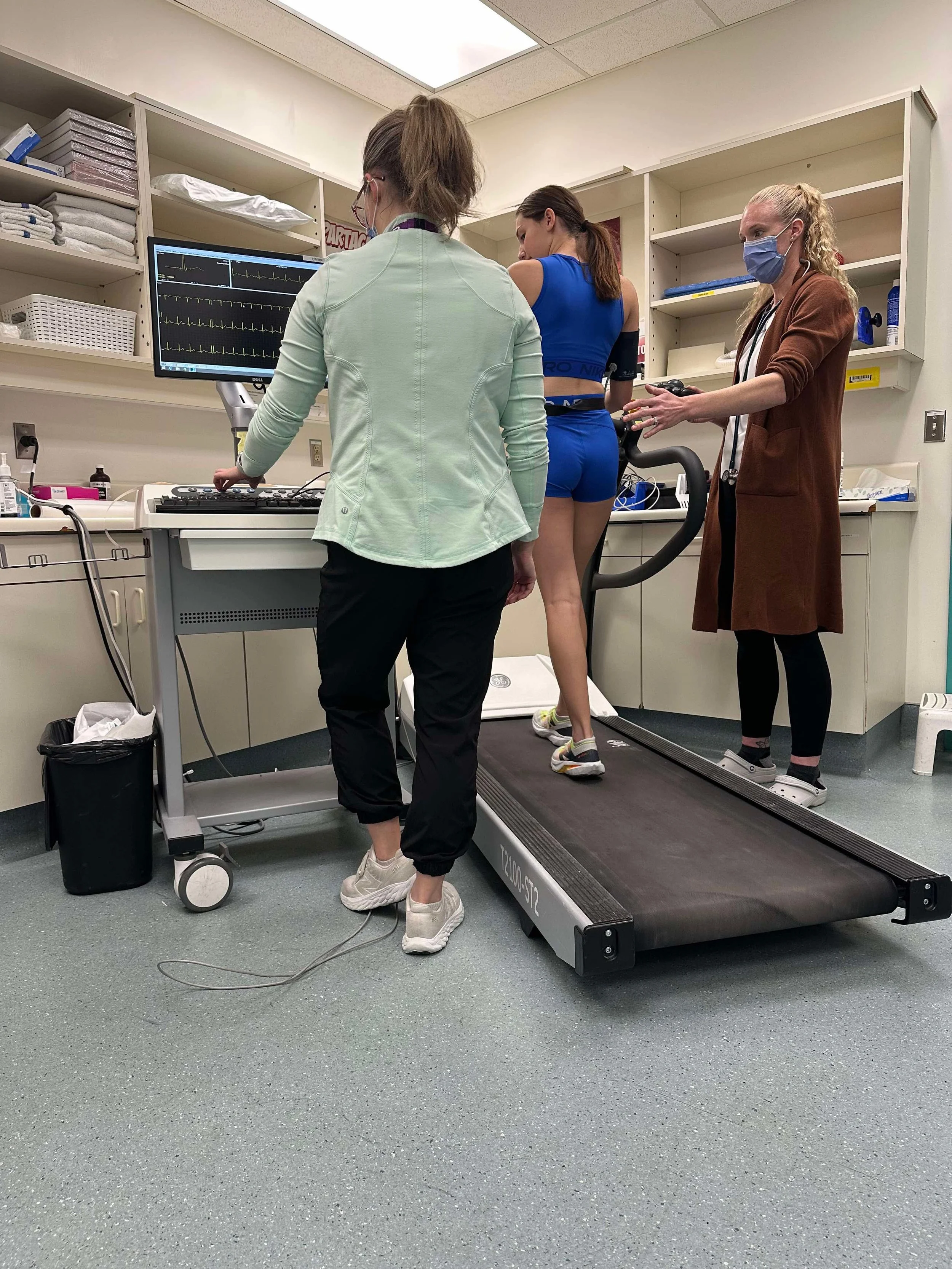
Florence at the hospital, undergoing a cardiac stress test to assess whether physical exertion triggers abnormal heart rhythms.
What About Those Who Have No One to Search for Answers With Them?
Let us return to July 2025.
Florence finally receives her diagnosis in Michigan. Her mother had recognized a possible explanation, gathered observations, and continued pursuing answers until they reached a specialist abroad.
Her story demonstrates what medical knowledge and family resources can make possible.
But it also invites us to look beyond her individual experience.
Some people live far from specialists. Others cannot afford repeated travel, take time off work, or cover the costs associated with additional medical consultations. Some may not even know that an autonomic nervous system disorder could explain their symptoms.
These barriers do not mean that all such patients will remain undiagnosed. They can, however, make the search for answers considerably more difficult.
A qualitative study published in 2024 in the British Journal of Health Psychology, based on interviews with 29 people seeking a POTS diagnosis, illustrates how medical recognition can influence a person's sense of being understood and their access to care.
A diagnosis is more than a name. It can open the door to explanations, accommodations, and treatment.
This is not about expecting physicians to know every medical condition or make diagnoses without sufficient evidence. Uncertainty is an unavoidable part of medicine.
But uncertainty should not prevent clinicians from listening to patients, reconsidering an initial hypothesis, or seeking specialist advice when symptoms persist.
Florence summarizes her message to healthcare professionals in a few simple ideas: listen to patients, avoid generalizing their symptoms, and do not prematurely assign an explanation when their condition remains unknown.
Today, she continues studying, practising Krav Maga, and planning her future. That does not mean her illness has disappeared.
Behind those activities are struggles that others do not always see: long nights of sleep that never seem sufficient, difficulties eating, pain, and exhaustion after training.
It took eight months to give a name to what she was experiencing. But do all patients have the same opportunity to keep searching for answers for that long?
Perhaps this is where her story becomes the story of many others: not because their symptoms are identical, but because access to medical answers can depend on factors that extend far beyond the illness itself.
The Nexus Question
If obtaining a diagnosis can depend as much on a patient's resources and knowledge as on their symptoms, how many people remain invisible to medicine?
Sources and Further Reading
Raj, S. R., Fedorowski, A., & Sheldon, R. S. (2022). Diagnosis and management of postural orthostatic tachycardia syndrome. Canadian Medical Association Journal.
https://pmc.ncbi.nlm.nih.gov/articles/PMC8920526/
Boris, J. R., et al. (2024). Long-Term POTS Outcomes Survey: Diagnosis, Therapy, and Clinical Outcomes. Journal of the American Heart Association.
https://doi.org/10.1161/JAHA.123.033485
Knoop, I., et al. (2024). Exploring the complexities of illness identity and symptom management in seeking a diagnostic label of POTS: An inductive approach. British Journal of Health Psychology.
https://doi.org/10.1111/bjhp.12700
Fitzgibbon-Collins, L. K., Pereira, T. J., & Edgell, H. (2025). Women, orthostatic tolerance, and POTS: A narrative review. Autonomic Neuroscience: Basic and Clinical.
https://doi.org/10.1016/j.autneu.2025.103284
Hogwood, A. C., et al. (2025). Determinants of Exercise Intolerance in POTS: A Systematic Review. Exercise, Sport, and Movement.
https://doi.org/10.1249/esm.0000000000000055
Prassanna, A. R. (2026). Persistent Cognitive Dysfunction in POTS: A Scoping Review of Neural Mechanisms, Interventions, and Critical Research Gaps. Cureus.
https://doi.org/10.7759/cureus.112862
Reis Carneiro, D., et al. (2023). Clinical presentation and management strategies of cardiovascular autonomic dysfunction following a COVID-19 infection – A systematic review. European Journal of Neurology.
https://doi.org/10.1111/ene.15714
Editorial note: This article is based on Florence's account, shared with her consent. The scientific studies provide context for her experience but do not constitute independent verification of her medical records.
